
Assisted living safety features are designed to reduce preventable injuries, support quick responses during emergencies, and help residents maintain independence without being left alone with risks they can no longer manage comfortably. For residents and families in Conshohocken, PA, evaluating safety means looking beyond attractive common areas and asking how the community handles everyday hazards, medical needs, emergencies, and changing abilities.
Which safety features matter most in assisted living?
The most useful safety features combine the building, staff practices, resident-specific care, and emergency procedures. No single device can make a residence safe by itself.
Key areas to examine include:
- Fire detection, alarms, sprinklers, and evacuation procedures
- Call systems or other ways to request help
- Fall-prevention features in rooms, bathrooms, hallways, and outdoor areas
- Medication storage, administration, and documentation
- Staff coverage during evenings, overnight hours, weekends, and emergencies
- Security measures that protect residents without unnecessarily restricting movement
- Backup plans for power outages, severe weather, medical emergencies, and building evacuation
- Procedures for residents living with memory loss or wandering risks
Pennsylvania assisted living residences are licensed and inspected under state requirements covering fire safety, staffing, training, physical conditions, resident care, and emergency planning. Families should still ask how those requirements are applied in daily operations, since compliance alone does not explain how responsive or well-organized a community may be.
How do fire and evacuation systems protect residents?
A safe residence should have working smoke detectors, fire alarms, fire extinguishers, emergency lighting, clearly marked exits, and an evacuation plan that accounts for residents who use walkers, wheelchairs, or other mobility equipment.
Fire drills should not be treated as a formality. Pennsylvania rules include regular drills, including drills during sleeping hours, and require evacuation procedures that reflect the building’s layout and resident population. Ask whether residents practice using different exit routes and whether staff know which residents need hands-on assistance.
During a tour, look for:
- Exit signs that are visible from hallways and common areas
- Corridors free of furniture, equipment, and loose rugs
- Fire doors that close properly but are not difficult for residents to pass through
- Sprinkler heads and smoke detectors that are not blocked or covered
- Posted evacuation information in places staff can quickly access
- A designated meeting area away from the building
A useful question is: “How would staff evacuate a resident who cannot walk independently?” The answer should describe an established process, not an improvised response.
What prevents falls in resident rooms and bathrooms?
Falls are among the most common safety concerns in assisted living. Effective prevention usually involves a combination of environmental design and individualized assistance.
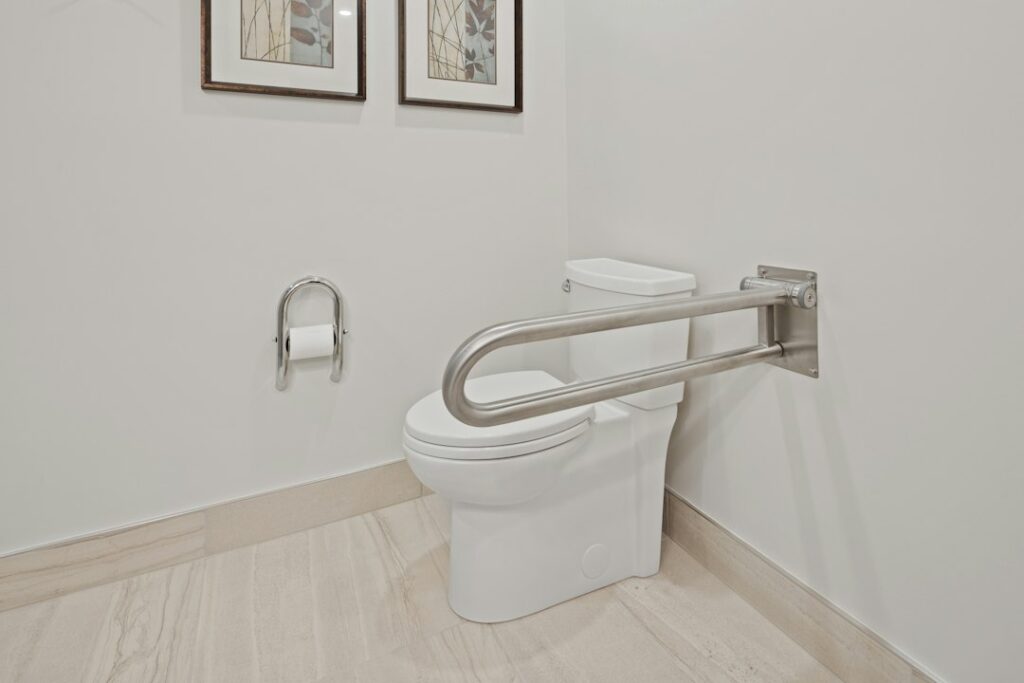
Bathrooms should have grab bars, nonslip flooring, adequate lighting, accessible sinks, and enough room for a walker or caregiver. Shower areas should be designed for seated bathing when needed. Emergency pull cords or call buttons should be reachable from the floor, not only from standing height.
Resident rooms should have:
- Clear walking paths between the bed, bathroom, and doorway
- Night lighting that can be used without crossing the room
- Bed heights suited to the resident’s mobility
- Secure handrails where changes in floor level exist
- Flooring without loose edges or abrupt transitions
- Furniture arranged to support safe transfers
Fall prevention also depends on staff knowing a resident’s history. A person who becomes dizzy after medication, rushes to the bathroom, or has difficulty seeing in low light may need a different plan than another resident. Ask how fall risks are assessed after a move-in, illness, medication change, or previous fall.
How are medications handled safely?
Medication safety depends on accurate records, secure storage, correct timing, and clear communication with residents and families. Many assisted living residents take several medications, and the risk of error can increase when prescriptions change after a hospital visit or specialist appointment.
Questions worth asking include:
- Who administers medications, and what training is required?
- How are new prescriptions verified?
- How are missed doses, refusals, side effects, and errors documented?
- Are medications stored securely but available when needed?
- How are over-the-counter drugs and supplements handled?
- How are medication lists updated after a hospital discharge?
Residents should also understand whether they may self-administer certain medications and what safeguards apply. A locked medication area protects residents, but it should not create delays when urgent medications are needed.
What security measures are appropriate?

Security features should protect residents while preserving dignity and freedom of movement. Common measures may include controlled exterior doors, visitor procedures, cameras in selected public areas, door alarms, and identification systems for staff or visitors.
Security should be tailored to the resident. A person with memory loss may need secured access to prevent unsafe wandering, while another resident may be capable of entering and leaving independently. Families should ask how the residence balances safety with personal choice.
Important questions include:
- How are visitors admitted after normal visiting hours?
- What happens if a resident does not return from an approved outing?
- Are outdoor areas enclosed or monitored?
- How are missing-person concerns handled?
- Are cameras used, and where are they located?
- How are privacy and resident rights protected?
A secured memory-support area should have more than a locked door. It should also provide clear paths, familiar visual cues, safe outdoor access when possible, and staff who understand dementia-related behavior.
How can families evaluate staffing and response times?
A call button is only useful when someone responds promptly. Ask how residents request help from bedrooms, bathrooms, common areas, and outdoor spaces. The system may use a wall-mounted button, pendant, pull cord, wearable device, or another method.
Families should ask whether response times are tracked and reviewed. It is also reasonable to ask how many staff members are typically present overnight and how coverage changes during meals, shift changes, staff breaks, or emergencies.
Observe the staff during a visit. Do they know residents by name? Do they notice when someone needs help standing or walking? Are call lights answered, or do they remain active for long periods? These observations may reveal more than a written description.
How are emergencies handled during storms or power outages?
Local conditions can make emergency planning especially relevant. Heavy rain can affect low-lying areas near the Schuylkill River, while winter weather can create icy walkways, travel delays, and power interruptions. A residence should have plans for these conditions rather than relying solely on outside emergency services.
Ask about:
- Backup power for alarms, elevators, call systems, heating, refrigeration, and essential medical equipment
- Emergency food, water, medication, and fuel supplies
- Procedures for residents who use oxygen or powered mobility equipment
- Communication with families during extended outages
- Snow and ice removal from entrances, ramps, and walkways
- Relocation plans if part of the building becomes unsafe
- Coordination with emergency responders
The most reassuring plan is specific. It should identify who makes decisions, how residents are accounted for, and how families receive updates.
What should families inspect during a tour?
A safety review should include ordinary details, not just visible equipment. Look at bathroom floors, hallway lighting, stairwell access, door thresholds, handrails, outdoor paths, and the placement of chairs and tables.
Notice whether residents appear rushed, isolated, or unsure where to go. Listen for alarms that are difficult to hear. Check whether emergency pull cords can be reached from the toilet and shower. Ask to see a typical resident room rather than only a model room.
Families can also request information about the residence’s license status, inspection history, emergency procedures, and process for reporting concerns. Safety is strongest when residents, families, and staff can raise concerns without fear that questions will be ignored.
IMAGE_ALT:
Staff member checks a bathroom grab bar and emergency pull cord beside an assisted living resident.
